
دكتور خصوصي لمواد الطب البشري الاساسيه وتحضير اختبارات الهيئه والرخص / تعلّم أُسُس الطب البشري عن بعد ✍
- 19 طالب
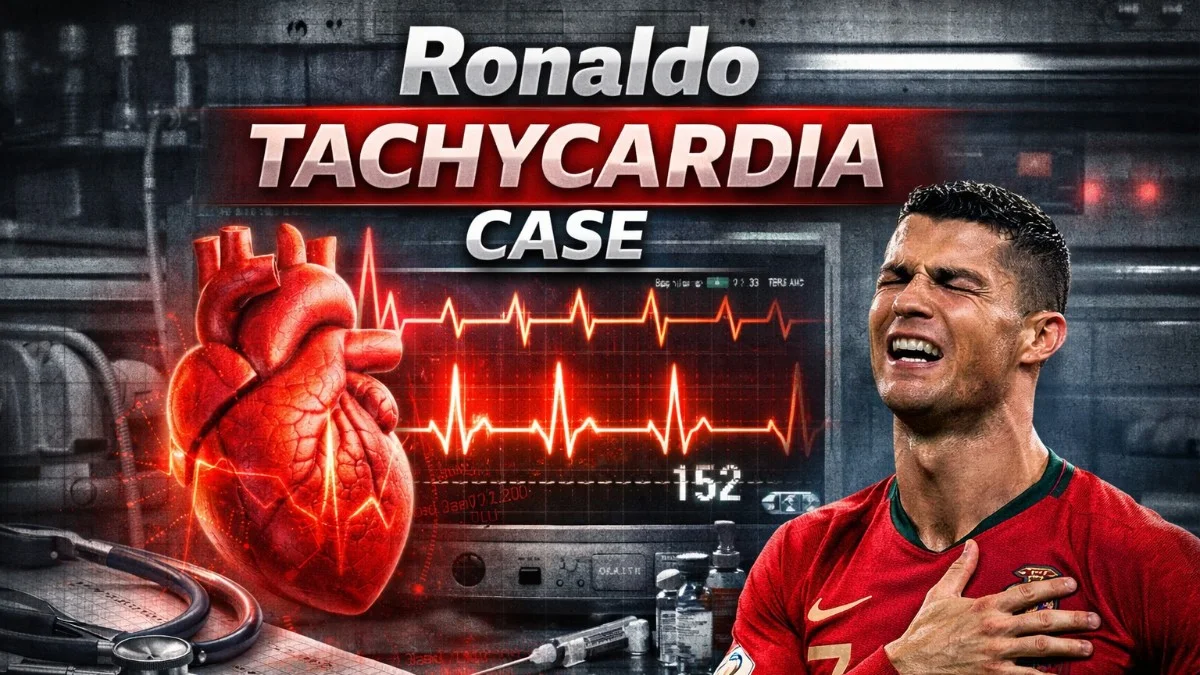
Did you know that Cristiano Ronaldo suffered a form of tachycardia known as ( Paroxysmalsupraventricular tachycardia )
Before he joined Sporting Lisbon🧐
He actually had a minor heart surgery ( laser ablation ) at 16/17 years old WHICH SAVED HIS FOOTBALL CAREER !
Let’s see what kind of cardiac surgery saved Ronaldo’s career and secured a good deal for Al-nassr 🤝😀
A 15-year-old male soccer player presents to the sports medicine clinic for evaluation after experiencing brief episodes of palpitations and lightheadedness during intense training sessions.
He denies chest pain, syncope, or shortness of breath.
His past medical history is unremarkable.
He is otherwise healthy and has no family history of sudden cardiac death or structural heart disease.
On physical examination, he is well-appearing, athletic, and vital signs are within normal limits
. Cardiovascular and pulmonary exams are unremarkable.
A resting ECG reveals a narrow complex tachycardia with a rate of 180 bpm.
The rhythm is regular, and P waves are difficult to discern.
A 24-hour Holter monitor confirms episodes of paroxysmal supraventricular tachycardia (PSVT) The patient is referred to pediatric cardiology. Electrophysiologic studies identify an ectopic atrial focus,
he undergoes successful radiofrequency catheter ablation. He returns to full athletic activity within two weeks without recurrence of symptoms.
❓Question:
Which of the following is the most appropriate next step in management?
A) Initiate beta-blocker therapy and restrict physical activity indefinitely
B) Refer for implantable cardioverter-defibrillator (ICD) placement
C) Schedule surgical ablation via open-heart approach
D) Perform radiofrequency catheter ablation of the ectopic focus
E) Reassure the patient and allow return to play without intervention Answer:
D) Perform radiofrequency catheter ablation of the ectopic focus
عمليه بسيطه يدخل الجراح عل البؤري اللي تسبب نشاط كهربي زايد ويحرقها بالليزر 📚 Reasoning :
This patient has paroxysmal supraventricular tachycardia (PSVT),
often due to AV nodal reentrant tachycardia (AVNRT) or ectopic atrial tachycardia a common cause of arrhythmia in young individuals,
. مرض خفقان القلب الناتج عن عُقده أو بؤره ذات نشاط كهربي مرتفع ، ف الأغلب تكون ف ال أتريم /أو في إيه ڤي نود ""AVNRT In symptomatic athletes, especially those with high physical demands,
catheter ablation is the preferred treatment due to its high success rate and low complication risk. It is curative in most cases and allows safe return to sports
OTHER OPTIONS
A ??: Beta-blockers may be used initially, but they are NOT curative
• B ?? : ICDs are reserved for life-threatening ventricular arrhythmias or structural heart disease.
• C : Surgical ablation is rarely needed; catheter-based approaches are first-line.
• E ??? : Reassurance alone is inappropriate in symptomatic arrhythmias in athletes due to risk of progression or sudden cardiac events.(VERY IMPORTANT -NEVER REASSURE .
.....ARRHYTHMIA IN ATHLETES ) Good Luck ! Save lives and careers ! Ronaldo is a living example
Key Takeaways for Premed and First‑Year Medical Students
-
One‑line summary of the case: PSVT in adolescents often presents with palpitations and lightheadedness; catheter ablation is frequently curative.
-
Why it matters for careers: Early diagnosis and treatment can preserve athletic careers and quality of life.
Clinical Background and Pathophysiology
-
Define PSVT and list common mechanisms: AVNRT, AVRT, and ectopic atrial tachycardia.
-
Typical ECG features and brief explanation of narrow‑complex regular tachycardia.
يرجى تسجيل الدخول لاضافة تعليق