- عن بعد/اونلاين
- طب بشري | Medicine طب أسنان | Dentistry
- كلية ابن سينا الأهلية للعلوم الطبية
Audience: First- and second-year medical students, preclinical learners,who want a clear, clinically oriented grounding in anatomy, embryology, and terminology. Duration: 8 weeks .
Learning Objectives
By the end of the course students will be able to:
-
Identify major anatomical structures and their relationships across body systems.
-
Explain key embryological processes that produce normal anatomy and common congenital variants.
-
Use standard medical terminology precisely in written and spoken clinical contexts.
-
Apply anatomical and embryological knowledge to simple clinical scenarios and imaging.
-
Demonstrate improved confidence for anatomy labs, clinical rotations, and exams.
Course Structure and Weekly Syllabus
Format: Weekly modules combining two 60–90 minute live tutoring sessions, short recorded micro-lectures, annotated diagrams, guided readings, and formative quizzes. Week 1 — Introduction and Terminology
-
Basic anatomical planes, directional terms, body cavities, tissue types; roots, prefixes, suffixes used in medical language. Week 2 — Musculoskeletal System
-
Bones, joints, major muscle groups, innervation patterns, surface anatomy. Week 3 — Nervous System Overview
-
Central and peripheral organization, cranial nerves, spinal cord segments, basic neuroanatomy terminology. Week 4 — Cardiovascular and Respiratory Systems
-
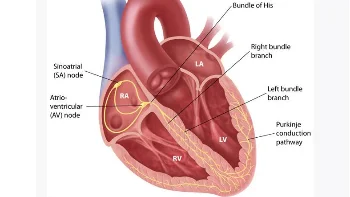
Heart anatomy, major vessels, lung lobes, basic hemodynamics and embryologic heart development. Week 5 — Gastrointestinal and Hepatobiliary Systems
-
Alimentary tract layers, accessory organs, gut rotation and common embryologic anomalies. Week 6 — Urogenital and Endocrine Systems
-
Kidney and reproductive organ anatomy, embryology of genital development, endocrine gland basics. Week 7 — Head and Neck, Special Senses
-
Facial anatomy, pharynx, larynx, ear/eye basics, embryology of craniofacial structures. Week 8 — Integration and Clinical Correlation
-
Cross-system review, common congenital conditions, interpreting basic imaging, final formative assessment.
Teaching Methods and Materials
-
Live tutoring: Focused, interactive sessions with annotated slides and whiteboard explanations.
-
Visual aids: High-resolution labeled diagrams, , and simplified embryologic timelines.
-
Active learning: Case vignettes, “spot the structure” image drills, and short clinical application exercises.
.